
[google-translator]
Career colleges have become a cornerstone of workforce development, bridging the gap between industry needs and educational opportunity.
While traditional universities focus on theory and four-year degree tracks, career colleges are strategically designed to deliver speed-to-skill, speed-to-workforce, and speed-to-ROI.
Recent data from Career Education Colleges & Universities (CECU) and Lightcast (2025) reveal that for-profit career institutions are driving measurable gains in student success, employment outcomes, and social mobility, all while addressing some of America’s most urgent labor shortages.
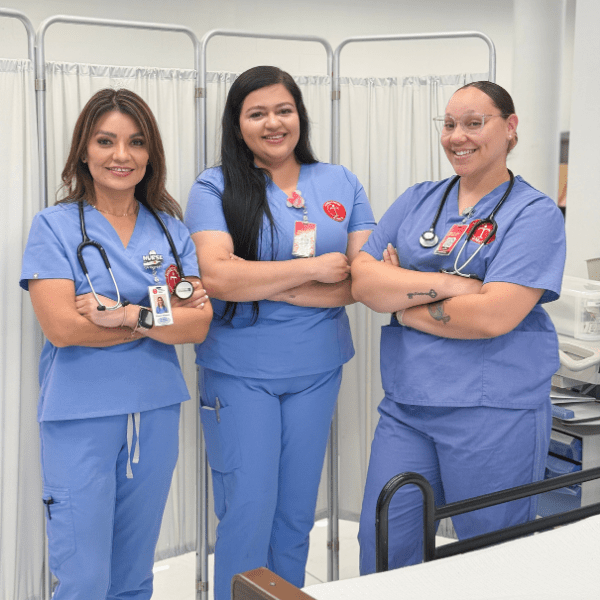
Career colleges play a critical role in creating inclusive access to education. The majority of their students represent populations historically underrepresented in higher education:
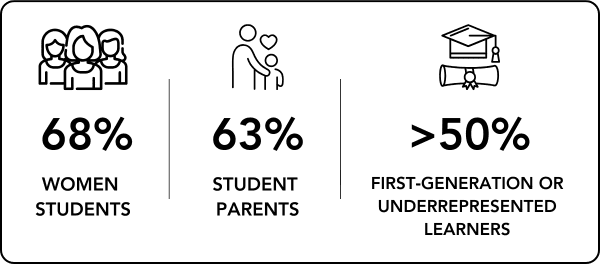
These demographic differences matter.
The student body at for-profit colleges reflects a mission of accessibility, helping working adults, single parents, and career changers gain valuable credentials that lead to upward mobility and community impact.
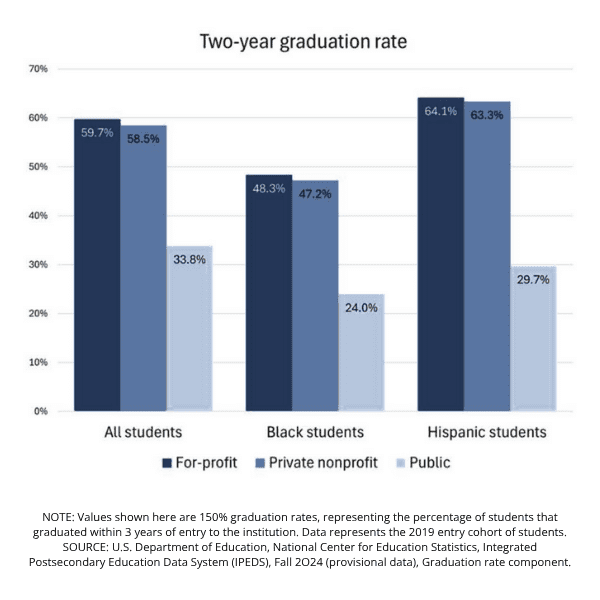
Across the U.S., industries are facing unprecedented talent shortages.
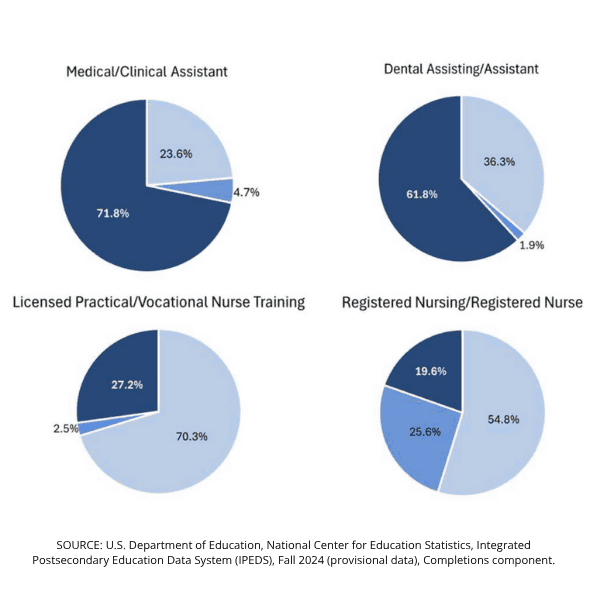
With the current shortage of healthcare workers in the nation and significant projected job growth through 2033, conferring degrees in healthcare is more essential than ever.
Percentage of degrees/certificates conferred by for-profit schools:
These programs are shorter, targeted, and hands-on—helping students enter the workforce faster while ensuring employers have access to qualified, job-ready talent. This direct link to workforce readiness makes the sector one of the most essential, and investable, drivers of America’s economic recovery and competitiveness.
According to the 2025 Lightcast analysis, students enrolled at for-profit colleges outperform their public and nonprofit peers in the following key success metrics. Demonstrating that shorter, skills-based education does not compromise on quality or outcomes. Instead, it offers a faster, more efficient pathway to sustainable careers.

5.75×
Higher Completion Odds
Students at for‑profit career colleges are 5.75× more likely to complete their credential within 150% of program time than peers at public or nonprofit schools.

2×
Higher Full‑Time Employment Options
Graduates from two‑year for‑profit programs have twice the odds of securing full‑time employment after graduation.

67%
Healthcare Credentials
For‑profit colleges award over two‑thirds of all Medical & Clinical Assistant credentials nationwide, essential for hospital and clinic staffing.
A recent study by the Georgetown University Center on Education and the Workforce showed that of the 4,600 schools evaluated for 10-year ROI:
14 for-profit schools rank in the Top 1%
125 for-profit schools rank in the Top 10%
21%
A higher percentage than public (14%) and nonprofit (16%) colleges, according to the 2025 Carnegie Classifications.
41%
Of “America’s Top Vocational Schools” Are For-Profit Schools.
Rankings were based on graduation rate, graduates’ salary, years it takes to pay off net cost, social mobility and diversity.
USA Today and Statista, July 2025
If the U.S. were to reduce for-profit college output by even 50%, the nation would face significant shortages in essential sectors—from nursing to automotive technology. This makes continued investment in career education not just a matter of institutional growth, but a matter of national economic stability.
Career colleges are shaping the next generation of skilled professionals who power America’s healthcare, technology, manufacturing, and transportation systems.
For investors, policymakers, and community leaders, supporting these institutions means strengthening the nation’s talent pipeline and ensuring that education keeps pace with the future of work.